
Network camera wiring tips
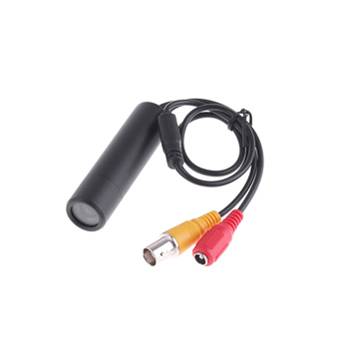
Among the current devices, network high-definition camera is undoubtedly the most popular one. Whether in terms of long-term development or convenience of application, network monitoring equipment has created a very good impression in people's minds. However, knowing how to use it does not necessarily mean you can install it. Many users have greatly compromised their monitoring effects due to improper installation. So, what should we pay attention to when installing network camera?
Camera location requirements
For surveillance cameras, the quality of their location is directly related to the imaging effect of the equipment. Therefore, many users regard the monitoring effect as the primary reference for the installation location of surveillance cameras. However, they overlooked a very important point: surveillance cameras are not omnipotent, and they also have their own requirements when it comes to the choice of installation location.
The first is the installation position, so that the camera can avoid interference from the surrounding environment and achieve a better photography and survival effect. When installing in an indoor environment, we must try our best to ensure that the height of the equipment is no less than 2.5 meters. In an outdoor environment, we must also place the monitoring equipment at a height of more than 3 and a half meters from the ground. Otherwise, there will be many negative effects, whether from the perspective of camera self-protection or equipment monitoring. Only after considering these most basic issues, the angle is the aspect we consider.
Camera wiring requirements
For network cameras, its wiring methods are obviously richer than traditional analog equipment. However, no matter which transmission method is used, interference is one of the issues we have to pay attention to. Especially for wired video signals, the co-directional transmission of signal lines and high-power wires is undoubtedly a taboo during the wiring process, and the two cannot be placed in the same transmission line tube for the convenience of construction. Even if it is impossible to separate the two due to environmental restrictions, a separation distance of at least half a meter must be ensured. Only with this kind of planning can we better avoid the impact of strong magnetic interference on video transmission.
For devices that use wireless signal transmission, there are fewer line restrictions. But the camera itself must also avoid surrounding sources of strong magnetic interference. At the same time, ensure the insulation between the camera and the ground.
In addition, we must also pay attention to avoid the influence and obstruction of the circuit on the work of the gimbal.
Requirements for lighting environment
When using surveillance cameras at night, in order to avoid reflections and shadows, lighting equipment is usually required. Infrared lighting can be used instead of ordinary light bulbs. However, users must use black-and-white surveillance cameras and network surveillance image servers with infrared lighting equipment, because black-and-white surveillance cameras are more sensitive to infrared light, while color surveillance cameras cannot perform infrared functions.
Nowadays, many cameras have begun to adopt wide dynamic functions to improve their imaging capabilities in backlight environments. However, this does not mean that the camera can continue to complete the work in a strong light environment.Because under strong light, direct strong light can easily make it difficult for the camera to position an accurate image normally, and ultimately cause the color filter on the sensor chip to permanently discolor, causing the camera to appear streaks in the surveillance image. Therefore, if possible, we try to keep the camera in a "smooth light" mode as much as possible, but no matter what, we must avoid direct stimulation of the camera lens by strong light for a long time.
High-performance terminals are indispensable
Bandwidth limitations have always been one of the important reasons why network monitoring is difficult to expand. It is precisely because of this factor that there has been a long-term polarization of network users - those with the ability to build their own networks, while those without the ability can only endure slow transmission or find another way out. However, with the continuous improvement of compression technology and the optimization of the network environment. The living environment of network monitoring is also getting better day by day.
However, if you want to enable general public network users to better complete network monitoring, a processing terminal with advanced performance is obviously indispensable. In terms of system performance, we should try to use the most advanced processing systems such as Linux or Win7, and have advanced CPUs, relatively large-capacity memory and graphics cards, etc., so that our equipment can achieve more comprehensive imaging effects. Surveillance camera brands
In addition, if there are other auxiliary alarm facilities in our system, we should pay attention to their compatibility with the system and the stability of the equipment itself in the current environment. This is what we need to focus on and debug when setting up the equipment.
Installation of equipment accessories
In addition to some of the complete aspects mentioned above, the installation specifications of some camera auxiliary equipment are also links that we cannot ignore during construction. For example, the installation position of camera pan/tilts, racks and other equipment must meet the design requirements. The installation should be stable and firm, and easy to operate and maintain. The distance between the back and sides of the rack and the wall must meet maintenance requirements; when necessary, we need to install a protective cover or temperature control device for the camera, etc. For links with complex circuit connections, we should also indicate the purpose and characteristics of each circuit to facilitate future maintenance and sorting. Surveillance equipment quotation
Camera location requirements
For surveillance cameras, the quality of their location is directly related to the imaging effect of the equipment. Therefore, many users regard the monitoring effect as the primary reference for the installation location of surveillance cameras. However, they overlooked a very important point: surveillance cameras are not omnipotent, and they also have their own requirements when it comes to the choice of installation location.
The first is the installation position, so that the camera can avoid interference from the surrounding environment and achieve a better photography and survival effect. When installing in an indoor environment, we must try our best to ensure that the height of the equipment is no less than 2.5 meters. In an outdoor environment, we must also place the monitoring equipment at a height of more than 3 and a half meters from the ground. Otherwise, there will be many negative effects, whether from the perspective of camera self-protection or equipment monitoring. Only after considering these most basic issues, the angle is the aspect we consider.
Camera wiring requirements
For network cameras, its wiring methods are obviously richer than traditional analog equipment. However, no matter which transmission method is used, interference is one of the issues we have to pay attention to. Especially for wired video signals, the co-directional transmission of signal lines and high-power wires is undoubtedly a taboo during the wiring process, and the two cannot be placed in the same transmission line tube for the convenience of construction. Even if it is impossible to separate the two due to environmental restrictions, a separation distance of at least half a meter must be ensured. Only with this kind of planning can we better avoid the impact of strong magnetic interference on video transmission.
For devices that use wireless signal transmission, there are fewer line restrictions. But the camera itself must also avoid surrounding sources of strong magnetic interference. At the same time, ensure the insulation between the camera and the ground.
In addition, we must also pay attention to avoid the influence and obstruction of the circuit on the work of the gimbal.
Requirements for lighting environment
When using surveillance cameras at night, in order to avoid reflections and shadows, lighting equipment is usually required. Infrared lighting can be used instead of ordinary light bulbs. However, users must use black-and-white surveillance cameras and network surveillance image servers with infrared lighting equipment, because black-and-white surveillance cameras are more sensitive to infrared light, while color surveillance cameras cannot perform infrared functions.
Nowadays, many cameras have begun to adopt wide dynamic functions to improve their imaging capabilities in backlight environments. However, this does not mean that the camera can continue to complete the work in a strong light environment.Because under strong light, direct strong light can easily make it difficult for the camera to position an accurate image normally, and ultimately cause the color filter on the sensor chip to permanently discolor, causing the camera to appear streaks in the surveillance image. Therefore, if possible, we try to keep the camera in a "smooth light" mode as much as possible, but no matter what, we must avoid direct stimulation of the camera lens by strong light for a long time.
High-performance terminals are indispensable
Bandwidth limitations have always been one of the important reasons why network monitoring is difficult to expand. It is precisely because of this factor that there has been a long-term polarization of network users - those with the ability to build their own networks, while those without the ability can only endure slow transmission or find another way out. However, with the continuous improvement of compression technology and the optimization of the network environment. The living environment of network monitoring is also getting better day by day.
However, if you want to enable general public network users to better complete network monitoring, a processing terminal with advanced performance is obviously indispensable. In terms of system performance, we should try to use the most advanced processing systems such as Linux or Win7, and have advanced CPUs, relatively large-capacity memory and graphics cards, etc., so that our equipment can achieve more comprehensive imaging effects. Surveillance camera brands
In addition, if there are other auxiliary alarm facilities in our system, we should pay attention to their compatibility with the system and the stability of the equipment itself in the current environment. This is what we need to focus on and debug when setting up the equipment.
Installation of equipment accessories
In addition to some of the complete aspects mentioned above, the installation specifications of some camera auxiliary equipment are also links that we cannot ignore during construction. For example, the installation position of camera pan/tilts, racks and other equipment must meet the design requirements. The installation should be stable and firm, and easy to operate and maintain. The distance between the back and sides of the rack and the wall must meet maintenance requirements; when necessary, we need to install a protective cover or temperature control device for the camera, etc. For links with complex circuit connections, we should also indicate the purpose and characteristics of each circuit to facilitate future maintenance and sorting. Surveillance equipment quotation
The above mentioned are the key aspects that we need to pay attention to when setting up a simple network monitoring system. Compared with some complex large-scale monitoring systems, these aspects are obviously simpler and more intuitive. But from a critical perspective, these can be said to be the lifeblood links that affect the quality of camera work and cannot be ignored. Only when we grasp these important but easily overlooked elements mentioned above can we enjoy more efficient and convenient network monitoring effects.
Xinlaida Security will protect your project. If you have any questions, please feel free to call us. 0755-33130307
This article comes from: Xlda Security www.xldcctv.com
Related content
The "Public Safety Video Management Regulations" have been implemented, and the construction of security monitoring systems has ushered in new requirements.
08-30
AI cameras are accelerating their implementation in retail stores, moving from anti-theft tools to business assistants
08-27
With the popularity of 8-megapixel 4K cameras, how to simultaneously upgrade bandwidth and storage
08-24
H.265+ encoding is widely used, and smart encoding continues to reduce storage costs
08-21
The construction of smart communities is accelerating, and the monitoring and renovation of old communities has become a major incremental market.
08-18
Video surveillance and the Internet of Things platform are integrated, and the security system becomes the digital base of the park.
08-15
Edge computing enters the security front-end, and intelligent analysis moves from the center to the camera side
08-12
Data security and privacy protection are becoming more stringent, and security systems need to simultaneously complement compliance capabilities
08-09